Quick Answer: Hot water extraction is often the better choice for carpets with deeply embedded dirt, heavy soiling, or certain pet-related stains, while dry carpet cleaning suits lighter cleaning needs and spaces that require less downtime. The best method depends on your carpet’s condition, material, and drying requirements.
Carpets collect more than the dust you can see. Foot traffic, food spills, pet accidents, and everyday debris can leave dirt trapped between the fibers, even when the surface looks reasonably clean. Choosing the right cleaning method helps tackle this buildup without causing unnecessary wear or keeping rooms out of use for too long.
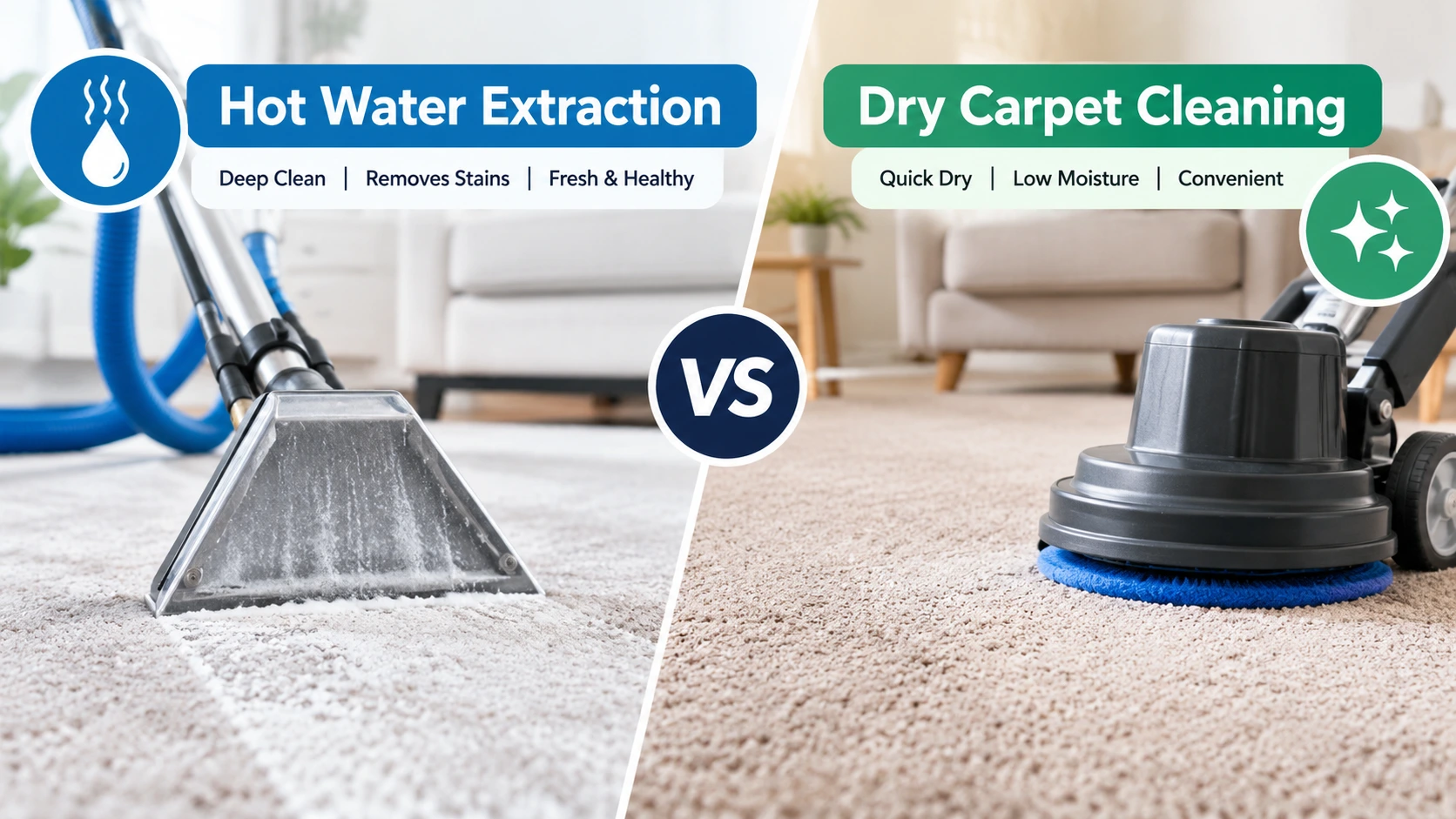
When comparing hot water extraction vs. dry carpet cleaning, the main differences involve moisture, cleaning performance, and drying time. Hot water extraction and dry cleaning serve different purposes, so your decision should reflect how dirty the carpet is, what kind of treatment it needs, and how soon you need to use the room again.
What Is Hot Water Extraction Carpet Cleaning?
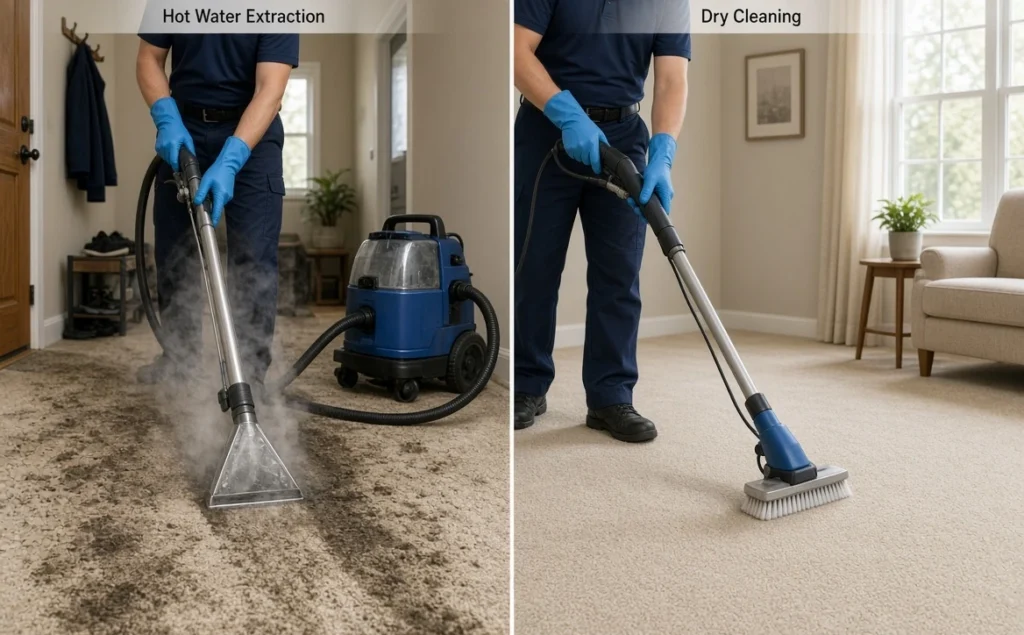
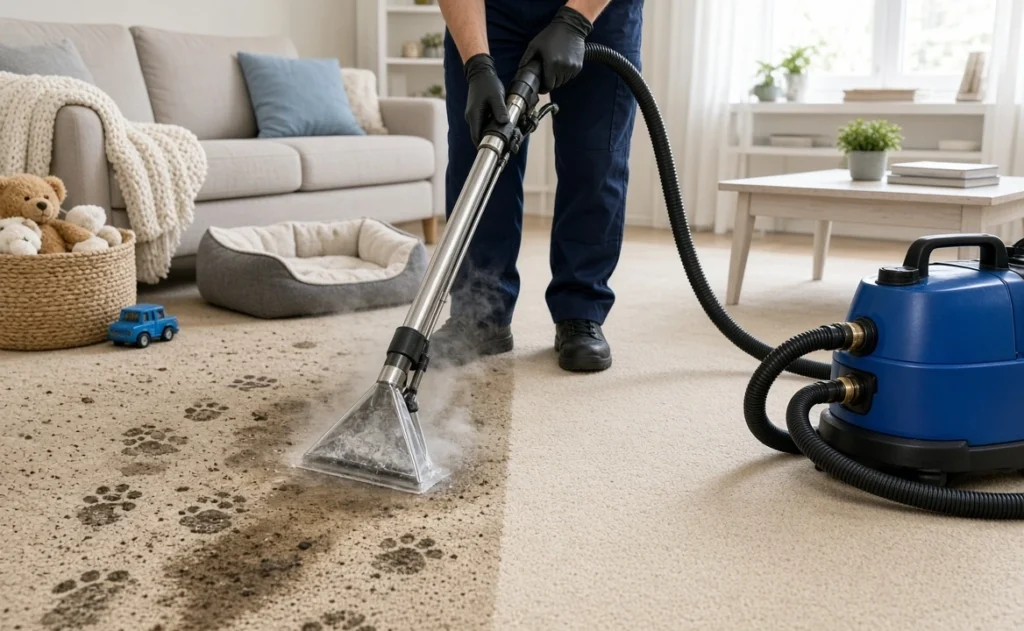
Hot water extraction is a professional carpet cleaning method that involves washing carpet fibers with heated water and an appropriate cleaning agent before removing the loosened grime with powerful suction. While many people know this process as steam cleaning, its main purpose is to flush out accumulated soil and extract the dirty water rather than clean with steam alone.
How Hot Water Extraction Works
Before the main cleaning begins, loose debris is removed with a vacuum, and a suitable treatment is applied to break down dirt clinging to the carpet fibers. Heated water is then introduced into the carpet, and powerful extraction equipment removes the water along with suspended dirt and cleaning residue. Proper extraction prevents excess moisture from remaining in the carpet.
Benefits of Hot Water Extraction
- Deep soil removal: Helps remove dirt embedded below the carpet’s surface.
- Targeted stain treatment: Pretreatment can improve results on many food, drink, and everyday stains.
- Pet-related cleaning: It’s the best method for heavily soiled or pet-damaged carpet when paired with appropriate treatment.
- Thorough cleaning: Useful for carpets that have accumulated grime through regular use.
Limitations of Hot Water Extraction
After extraction, some moisture remains in the carpet fibers, so the area may need several hours before it is ready for everyday foot traffic. If the equipment fails to recover sufficient water or the room has limited ventilation, moisture may linger longer than expected. Some delicate or moisture-sensitive carpets may also require an alternative process, making a material assessment important before cleaning.
What Is Dry Carpet Cleaning?
Dry carpet cleaning uses specialized compounds, absorbent materials, or low-moisture cleaning solutions to loosen and collect dirt without saturating the carpet. Despite the name, some methods use a small amount of moisture rather than remaining completely dry.
How Dry Carpet Cleaning Works
Depending on the system, a cleaning compound or low-moisture product is spread across the carpet and worked into the fibers using suitable equipment. The material attracts or loosens soil before being removed through vacuuming or another specified process.
Benefits of Dry Carpet Cleaning
- Shorter drying periods: Low moisture levels can allow the carpet to return to use sooner.
- Less disruption: Useful in offices and other spaces where extended downtime is inconvenient.
- Routine maintenance: Can help manage light soil between deeper cleaning sessions.
- Flexible applications: Certain systems are suitable for carpets that cannot tolerate substantial moisture.
Limitations of Dry Carpet Cleaning
Results depend on the cleaning system, product, carpet construction, and amount of embedded soil. Dry cleaning may struggle to address severe soil buildup or pet urine that has soaked beyond the carpet’s surface. Cleaning compounds must also be removed correctly to prevent residue from accumulating.
Hot Water Extraction vs. Dry Carpet Cleaning: Key Differences
Understanding how the methods compare makes it easier to choose one that fits your cleaning needs. Looking at how each method handles dirt and moisture, along with the time needed for the carpet to dry, can help you decide which approach makes more sense for your situation.
| Comparison Factor | Hot Water Extraction | Dry Carpet Cleaning |
|---|---|---|
| Cleaning Process | Combines warm water and carpet-safe detergents with strong suction to lift and remove loosened grime. | Uses specialized compounds or low-moisture solutions to clean carpet fibers. |
| Moisture Level | Uses more water during cleaning. | Uses minimal moisture. |
| Dirt Removal | Effective for removing deeply embedded soil. | Can freshen carpets with everyday dirt, though results vary by cleaning technique and product used. |
| Heavily Soiled Carpets | Often preferred for intensive cleaning. | May be less effective on severe soil buildup. |
| Drying Time | Typically takes several hours to dry. | Usually dries faster. |
| Best Use | Deep cleaning, heavy traffic, and accumulated grime. | Routine maintenance and a quick cleaning turnaround. |
Which Carpet Cleaning Method Is Best for Different Situations?
The right choice depends on what your carpet needs, not simply which method finishes faster. Factors such as soil buildup, pet accidents, foot traffic, and the need for quick room access can all influence your decision.
For Heavily Soiled Carpets
Hot water extraction is often a strong option for carpets in busy hallways, living rooms, and entryways where dirt builds up over time. Its ability to loosen and extract embedded soil makes it suitable for many deep-cleaning jobs. Pretreatment may be needed for stubborn spots or areas with concentrated grime.
For Lightly Soiled Carpets
Dry carpet cleaning can work well when the carpet needs a refresh rather than intensive soil removal. It may be particularly convenient between scheduled deep cleans, helping manage everyday dirt without leaving the carpet damp for an extended period.
For Homes With Pets and Children
Spills, muddy footprints, and pet accidents can affect both the appearance and cleanliness of household carpets. Hot water extraction can lift away many contaminants, but urine that seeps into the carpet backing or underlying padding may need additional targeted treatment.
For accidents that leave behind persistent stains or odors, learn how to remove pet urine from carpet and when additional treatment may be necessary.
For Offices and Commercial Spaces
Commercial properties must balance carpet cleanliness with daily operations. Finding the best method for commercial carpet starts with looking at the demands of the space, including daily use, fiber durability, and the kind of dirt tracked indoors. Dry carpet cleaning may suit busy offices, retail spaces, and facilities that need rooms available again quickly.
Scheduling hot water extraction during quieter hours gives high-traffic areas a thorough clean while allowing time for the carpet to dry before people return. Some facilities benefit from combining routine low-moisture care with periodic extraction.
For Carpets That Need to Dry Quickly
If a room must be used soon after cleaning, a low-moisture method may be the practical choice. Hot water extraction can still be appropriate when effective moisture recovery and adequate airflow are available, but the carpet should not be put back into service until it is sufficiently dry.
Restore Your Carpets With the Right Cleaning Approach
Choosing between hot water extraction vs. dry carpet cleaning comes down to your carpet’s condition, the type of dirt involved, and how much drying time you can allow. For deeply embedded grime, extraction is often a worthwhile choice, while low-moisture cleaning can help keep routine maintenance convenient.
At SteamPlus Carpet Cleaning, we provide residential and commercial carpet cleaning services using professional truck-mounted equipment and carefully selected cleaning solutions. Our expert team focuses on removing embedded dirt, treating stubborn stains, and extracting excess moisture to help carpets dry more efficiently.
Contact us today for a free quote and find the right cleaning approach for your carpets!
FAQs
1. What is the most effective carpet cleaning method?
Hot water extraction is often effective for deep cleaning carpets with embedded dirt and heavy soil. Dry carpet cleaning can be suitable for lighter buildup and situations where faster turnaround matters. The best option depends on carpet material and cleaning needs.
2. Why is my carpet still dirty after steam cleaning?
Remaining dirt may result from inadequate pretreatment, stubborn stains, heavy soil buildup, or residue from an earlier cleaning. Some stains can also permanently alter carpet fibers. A professional assessment can help identify the cause and determine whether additional treatment is appropriate.
3. What do professional carpet cleaners use to clean carpets?
Professional cleaners may use specialized cleaning solutions, stain pretreatments, hot water extraction machines, or low-moisture cleaning systems. The products and equipment depend on the carpet material, the type of soil, and the cleaning method selected.
4. How long does carpet take to dry after hot water extraction?
Most carpets take around 6 to 8 hours to dry, although humidity, airflow, carpet thickness, and extraction efficiency affect the timeframe. Good ventilation and effective moisture removal can help speed up drying.
5. How often should carpets be professionally cleaned?
Many households benefit from professional carpet cleaning every 6 to 12 months. Homes with pets, children, allergy concerns, or heavy foot traffic may need more frequent attention. Follow the carpet manufacturer’s maintenance recommendations for the best results.